
Education
The huge potential of education
In our rural area, families are under great social and political pressure each year to enrol their children for school. However, actual attendance at school falls far below the enrolment statistics. This is because some families cannot afford the pen and exercise books needed for attendance and some children stay at home and work in their homes or in the fields. The gap between enrolment and attendance may be up to 50%, especially at critical times in the farming calendar.
In the past, more boys than girls have attended school. However, in the last 10 years, our experience has seen equal attendance of the sexes,
with a slightly higher proportion of girls than boys at High School level.
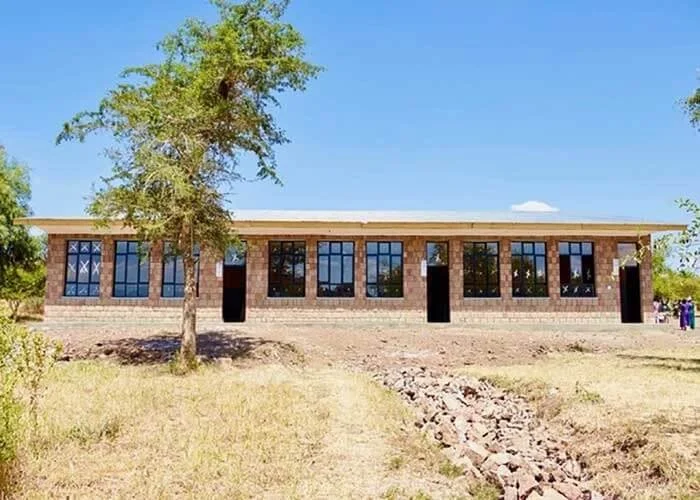
The government emphasis on school construction has been almost entirely on buildings for higher education. Normally, communities must construct their own elementary schools with whatever help they can get from charities.
Athena Project
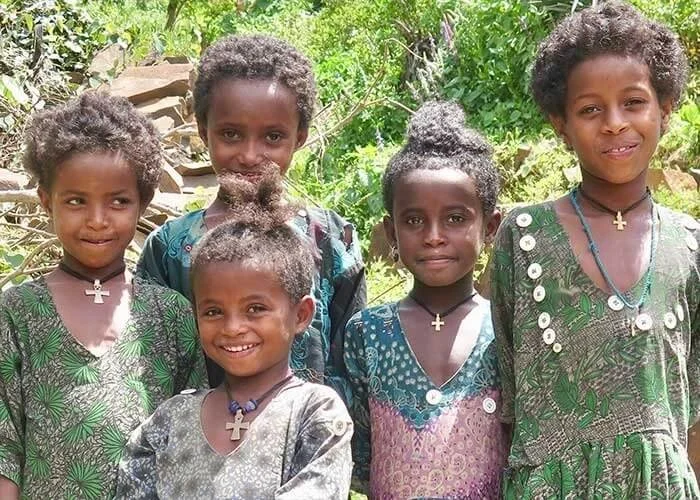
The Athena project was set up in 2018 by Ros and Mary Johnson and identifies and funds students in poor, mainly rural, schools to be able to attend the High School in Lalibela town.
There they can complete Grades 8 to 12 and therefore be eligible to attend a University or Technical College.
The results from Athena are already showing that many young Ethiopians, who given the opportunity along with the security of food,
shelter & books, etc. which Athena provides, can realise their potential.
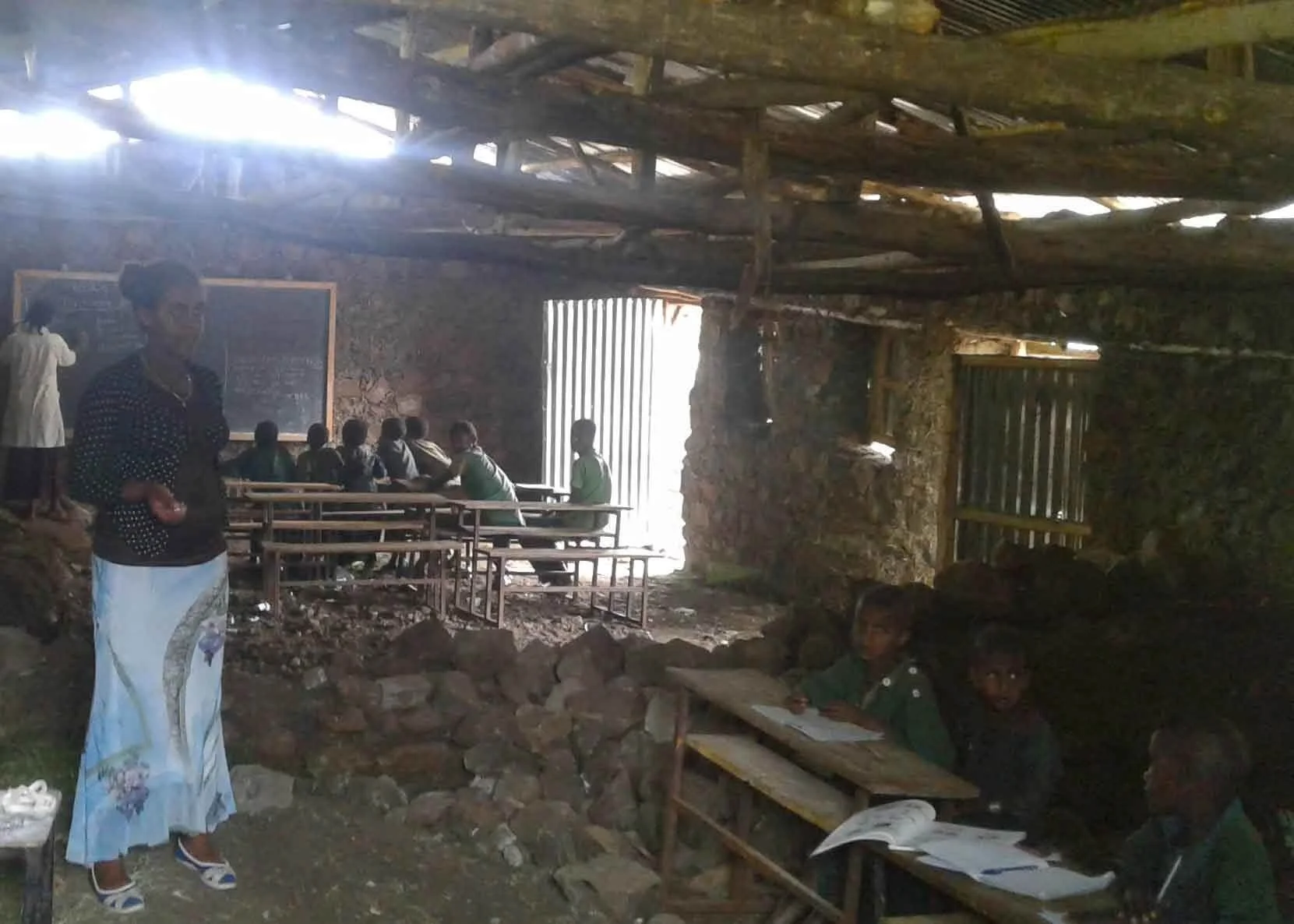
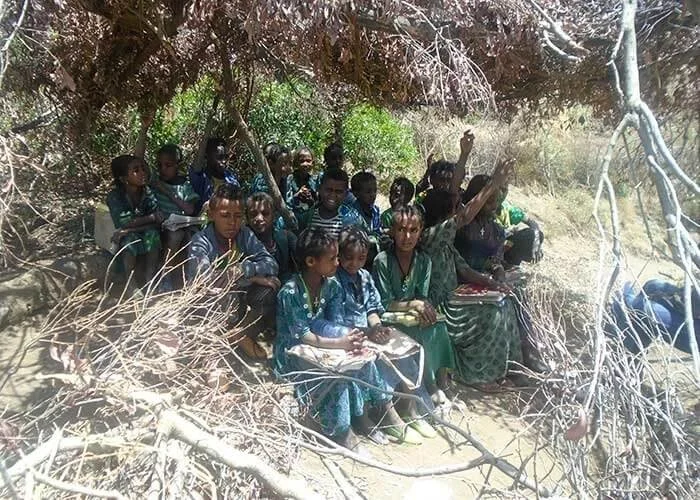
Before: Teaching continues in a collapsing block of 2 classrooms
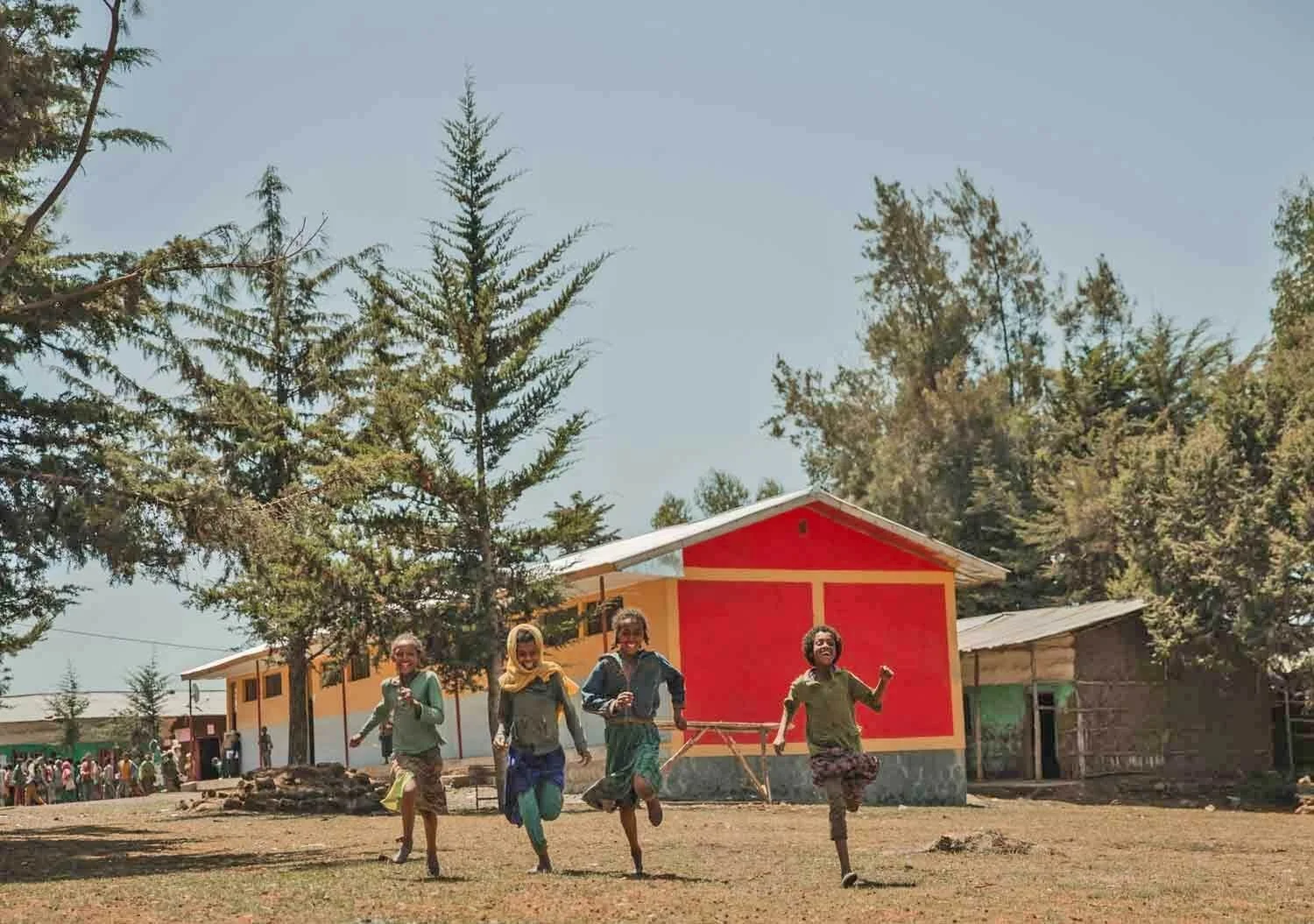
After: New block to provide Grade 5-8 at Irfa
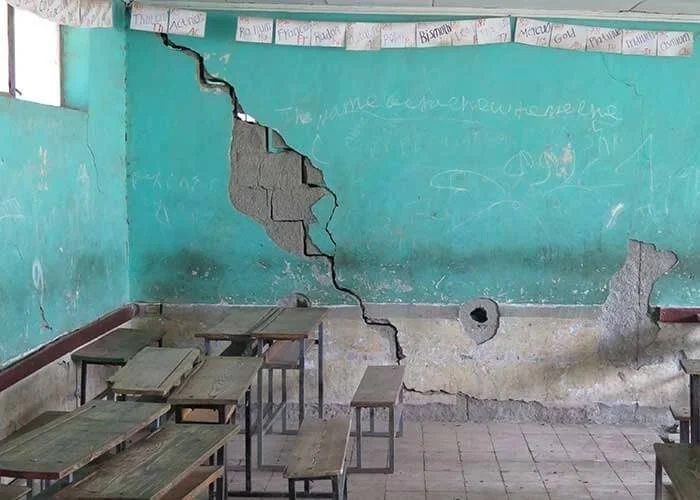
Before: Village school built on poor foundations
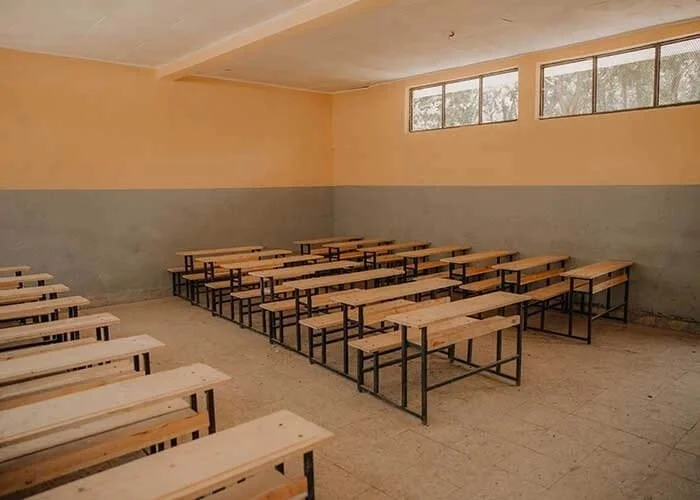
After: New classroom – desks made in Lalibela, funded by Rotary International
Hostel for Disadvantaged Girls
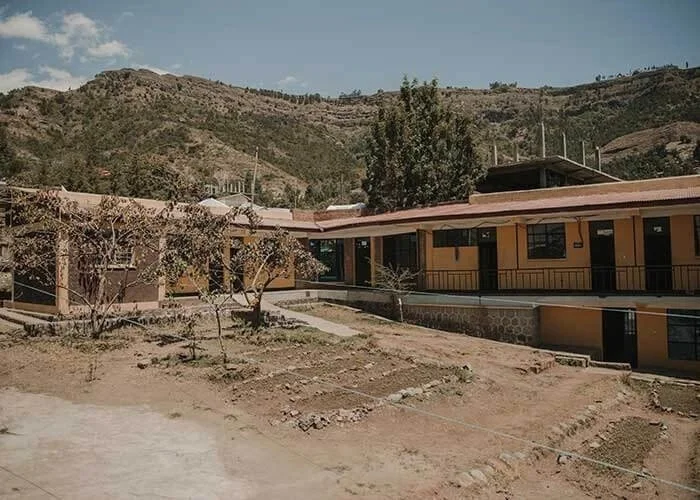
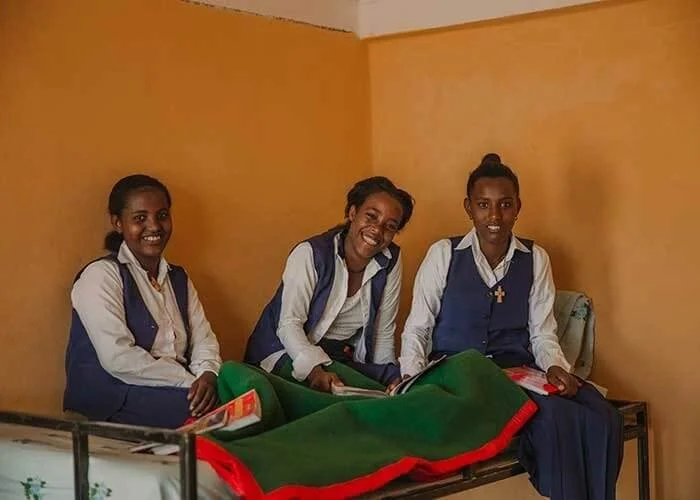
A hostel on the grounds of Lalibela High School was constructed in 2010 by a local Ethiopian NGO to accommodate 36 girls from rural areas who had reached, often with a struggle, Grade 8 in their local schools. Such girls often cannot move on to High School in Lalibela because of the cost of food and renting a room there, and the security issue of walking alone, often long distances in the mountainous countryside.
The project failed for lack of money. In 2021, Create Impact stepped in to fund the girls’ total basic food needs, plus extra security 24/7, cooking equipment, bedding, cleaning materials, etc.
Lalibela High School –
Millfield School, Somerset,
(UK) Link
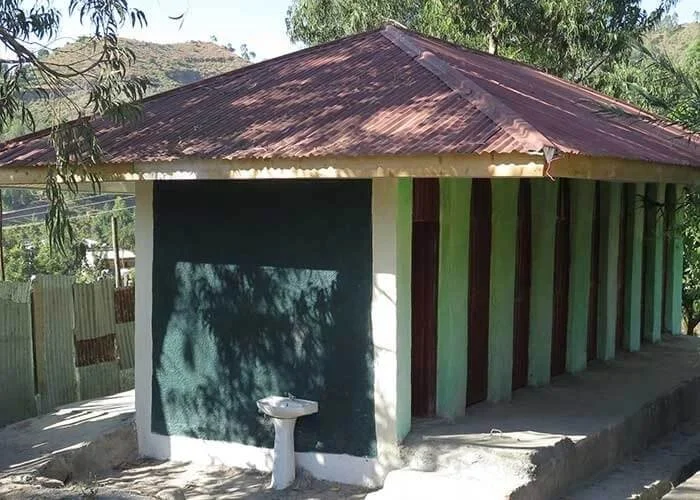
Lalibela High School has 3,000 students covering grades 8-12, many from the surrounding rural area. Millfield UK School students have collected money for the High School for many years and a group of Millfield students visited the High School to engage in seminars, sports etc. The money they collected provided a range of facilities, including clean water reservoir and distribution points, female latrine, chemistry laboratory refurbishment, sports equipment and reference books.
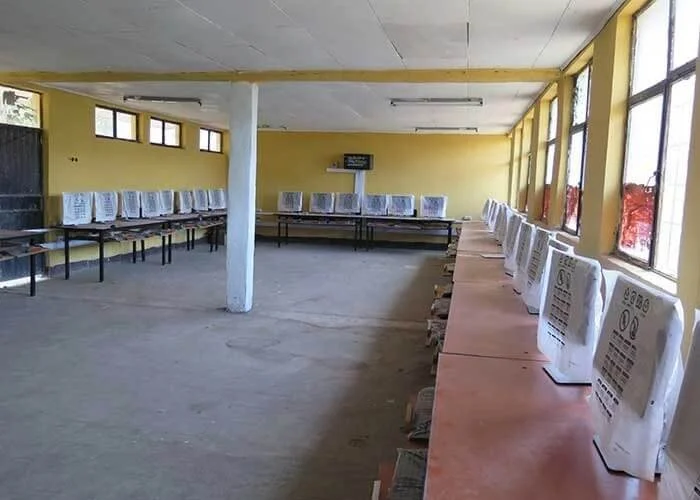
In addition, we introduced Camara.org to the High School. It is a major UK charity which provided 80 professionally reconditioned computers, advice, technical expertise and a major training programme, for 3 IT Labs, which they refurbished for the purpose. This whole programme was jointly funded by Camara, Millfield School and Lalibela Trust.
Total Benefitting from all these Education Projects
School construction: 57 classrooms 2 shifts per day: 34,000 students benefitting
Lalibela High School: 3,000
Hostel: 36